Why go down the rabbit hole
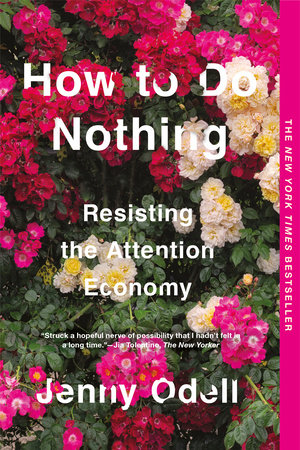
Jenny Odell writes in How to Do Nothing:
So why go down the rabbit hole? First and most basically, it is enjoyable. Curiosity, something we know most of all from childhood, is a forward-driving force that derives from the differential between what is known and not known. Even morbid curiosity assumes there is something you haven’t seen that you’d like to see, creating a kind of pleasant sensation of unfinished-ness and of something just around the corner.
This leads into a second reason to leave behind the coordinates of what we habitually notice: doing so allows one to transcend the self. Practices of attention and curiosity are inherently open-ended, oriented toward something outside of ourselves. Through attention and curiosity, we can suspend our tendency toward instrumental understanding—seeing things or people one-dimensionally as the products of their functions—and instead sit with the unfathomable fact of their existence, which opens up toward us but can never be fully grasped or known.
Odell then writes about the German philosopher Martin Buber, his book I and Thou and how Buber describes a way of looking at things for a worldview where everything doesn’t exist for us.
I have been watching a recording of Hubert Dreyfus teaching a class on Heidegger’s Being and Time and what Odell is communicating through Buber reminds me of Heidegger’s concepts of “Zuhandenheit” (readiness-to-hand) and “Vorhandenheit” (presence-at-hand) as well.