The shimmering
Several months ago, while reading Joan Didion’s essay Why I Write, I was surprised to read how certain images “shimmer around the edges” for her. She writes that she has these images in her mind—where the figure and background dissolve into each other—and that they play a central role in her writing.
This wasn’t my first encounter with Didion’s shimmering images. I first noticed them in Elisa Gabbert’s book Any Person Is the Only Self. Back then, the idea of these “shimmering images” raised such a big question in my mind that I didn’t pay attention to Didion, or to her essay. I ended up stumbling upon it a year and a half later, this time with a treasure trove of notes on the subject. That’s when I decided to put what I had found into writing.
Didion explains how the images help her write: contrary to what one might think, she doesn’t write about the images. “I write entirely to find out what I’m thinking, what I’m looking at, what I see and what it means,” she says. She claims that the images tell her the particular arrangement of the words, which in turn tell her what’s going on in these images. She insists: “It tells you. You don’t tell it.”
In her essay starting with Didion’s shimmering images, Elisa Gabbert quotes Vladimir Nabokov talking about the shimmering as well; he likens it to “a prefatory glow, not unlike some benign variety of the aura before an epileptic attack.” My dentist is next to a nice bookstore and after every appointment, I treat myself to a visit. On one of those visits, I picked up a book, opened a random page and saw Nabokov photographed with a butterfly net, captioned: catching a thought. “For the Russian novelist, ideas are like butterflies,” the book claimed. "The talented thinker, like a skillful lepidopterist (which Nabokov also happened to be), must learn to lie patiently in wait until they can be taxed into flying into the net of awareness.” What a nice coincidence, I thought. Failing to realize that Nabokov’s butterflies would stay with me for a long time, I closed the book and moved on.
In a conversation with Krista Tippett on her podcast, I heard Maria Popova quoting Virginia Woolf from her diary on the difficulty of writing about the soul: “the truth is, one can’t write directly about the soul. Looked at, it vanishes; but look at the ceiling, at Grizzle [the dog], at the cheaper beasts in the Zoo which are exposed to walkers in Regent’s Park, and the soul slips in.” And there it was again: like Nabokov’s butterflies flying into the net of awareness, Woolf was talking about the soul “slipping in” once you stop looking for it. Didion has this figured out as well: “You can’t think too much about these pictures that shimmer. You just lie low and let them develop. You stay quiet,” she says as she tries to “locate the grammar in the picture.”
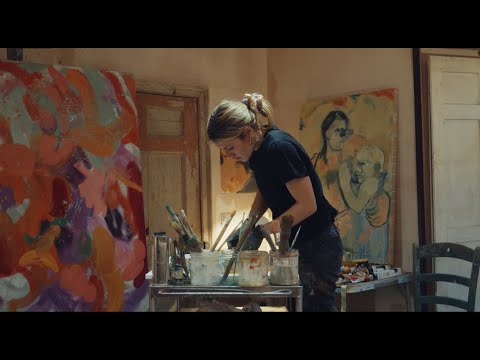
Antonia Showering, a British painter I discovered through YouTube, describes something similar in her painting process. She starts with broad strokes of oil paint, losing herself in the moment, adding one coat over another, until something relevant emerges and she finds herself finishing the painting with the finest brush. She says it’s almost as if the painting “slips into” the canvas. It was already within her, and this process helps draw from her subconscious, so what’s hidden can gently walk into existence.
Showering states at the end of the video that although her paintings are deeply personal, she wants them “to be read and felt from the viewpoint of other people’s lives.” Samia Halaby, a Palestinian-American visual artist, lets those viewpoints enter her process. She posts her abstract paintings on Instagram with questions like “what is the place and space you see?” or “do you want to swim or dance?” She wants people to share what they are feeling while she is still working on the painting, almost as if she is trying to catch the moment the “slipping in” happens. She explains that she is “using the principles of nature, rather than the appearance of it.” In other words, she paints what enables “seeing” to happen in others, rather than what she sees herself.
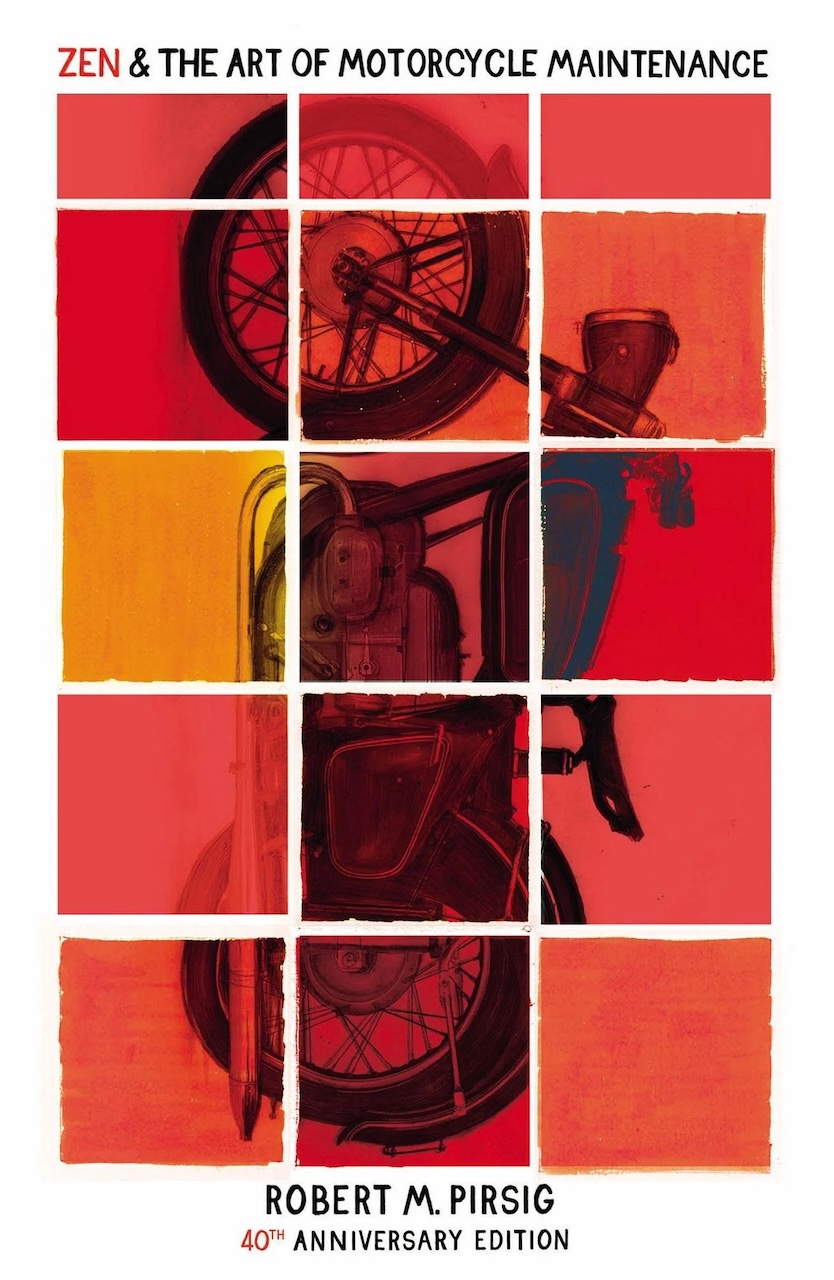
A similar notion forms the basis of Robert Pirsig’s questioning of what “Quality” is in Zen and the Art of Motorcycle Maintenance. Preintellectual reality, as he defines it, is the reality before it is intellectually perceived. A tree that we think we see is our perception of it. The time it takes for light reflecting from the tree to reach our eyes, move through the brain, and be understood through our preconception of what a tree is, is a complex process, one that draws on all the experiences we’ve had of trees.
Pirsig finds Quality in Tao Te Ching, the 2,300-year-old Chinese classic and foundational work of Taoism. He replaces Tao with Quality and it fits perfectly: “Quality is all-pervading. Fathomless! … It cannot be defined. And reverts again into the realms of nothingness. That is why it is called elusive. Meet it and you do not see its face. Follow it and you do not see its back.”
This feels related to the shimmering, and it also brushes up against what many would call the divine. Pirsig, seeking to bridge the chasm between the objective, rational world of science and the subjective, emotional world of art, finds his ideas reflected to him in an ancient religious text.
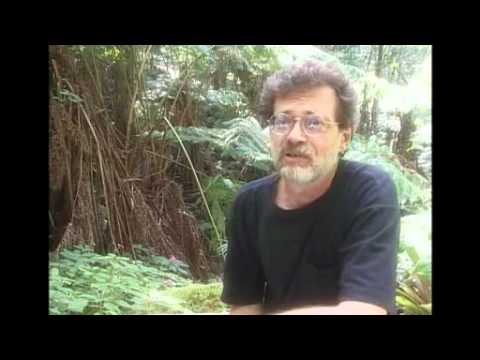
This unification of science, art and religion reminds me of Terence McKenna, the American philosopher, ethnobotanist, lecturer, and author, who believed we’re on the brink of “a fusion of western science and eastern mysticism.” Through his speculative theory of novelty, that the universe seeks novelty and is pulled towards a future point where everything is hyper-connected, he offers us “a theory which covers physics, chemistry, geology, biology, sociology, linguistics, the whole thing.” What struck me about McKenna is not only the breadth of his knowledge but his extraordinary skill in explaining it in a clear and captivating tone. One YouTuber commented, “It’s like listening to a river flow.”
You might be put off when McKenna mentions that “the mushrooms told me.” He was a prominent advocate for the responsible use of natural psychedelics, particularly psilocybin mushrooms, ayahuasca, and DMT, which he believed enabled access to profound visionary experiences, alternate dimensions, and communication with intelligent entities. Despite being a polarizing figure, he inspired me to learn more about psychedelics, and I found my way to watching Michael Pollan’s documentary, How to Change Your Mind, where in four episodes Pollan tries four different psychoactive substances while exploring their history, culture, and effects.
In episode 2, titled Psilocybin (the psychoactive compound in some mushrooms), Pollan tells the story of María Sabina, a Mexican healer who learned traditional medicinal rituals from her ancestors. Gordon Wasson, a writer and ethnomycologist, seeks her out, convinces her to allow an encounter with the “magic” mushrooms, and publishes an account in Life magazine. Soon people flock to the village, and among them, according to the documentary are Bob Dylan, George Harrison, and Mick Jagger. I was like, of course! These artists are yearning for something beyond the confines of ordinary perception. “We have such a narrow field of view of reality, and we have our blinders on,” says Paul Stamets, introduced as a legend in mushroom circles. “We are children of nature, and maybe these mushrooms are the portal for us to go back into our primordial origins.”
Joan Didion writes about psychedelics too. In Why I Write, when she describes how certain images shimmer for her, she says “people on hallucinogens describe the same perception of objects. I’m not a schizophrenic, nor do I take hallucinogens.” By contrast, Chilean writer Benjamin Labatut admits to venturing into fuzzier edges of his mental states to hone his craft. “The people I admire the most in every field have this wondrous ability to let their unconscious bleed into what they do,” he says in an interview with The Guardian. “I knew that I didn’t have that, so I did a bunch of very irresponsible things trying to kickstart that.”
In How to Change Your Mind, Michael Pollan describes two modes of awareness. The first is like a spotlight: narrow, directed, and useful for completing tasks in adult life. The second is like a lantern: open and receptive to everything all at once. This, he suggests, is closer to the consciousness of children and seems to return to people in their psychedelic experiences. I have been drawn to this idea ever since I encountered the blank-slate theory, and found myself imagining what it might feel like to be born: flooded with light, sound, heat, taste, and smells, but without any constructs to associate them with. Step by step, we are introduced to the world, the human world, with all the names given to things that needed to be named. We learn what to pay attention to and what to ignore. As we learn how to fit into the world, we also shape our perception of it. And through all these encounters I’ve put together, I’ve come to realize that, every now and then, this construct can crack open and a chance arises to notice the shimmering. And if we can pause for a moment, lie low, patiently waiting for it, it might just slip in.