The more he saw the more he saw there was to see
At the end of the 40th anniversary edition of Zen and the Art of Motorcycle Maintenance, the correspondence between Pirsig and his editor is included. In it, Pirsig tells the editor that the book is finished. That it is detailed down to the paragraph on 3,000 card slips, and all that remains is to write it.
After Zen, I started reading Lila, and to my surprise, Pirsig incorporated the act of writing the book into the story itself, describing in detail how he used card slips (a.k.a. the Zettelkasten method) to organize his thoughts.
In one passage, he describes the effect of this way of working:
The slips kept expanding in every direction so that the more he saw the more he saw there was to see. It was like a venturi effect which pulled ideas into it endlessly, on and on. He saw there was a million things to read, a million leads to follow...
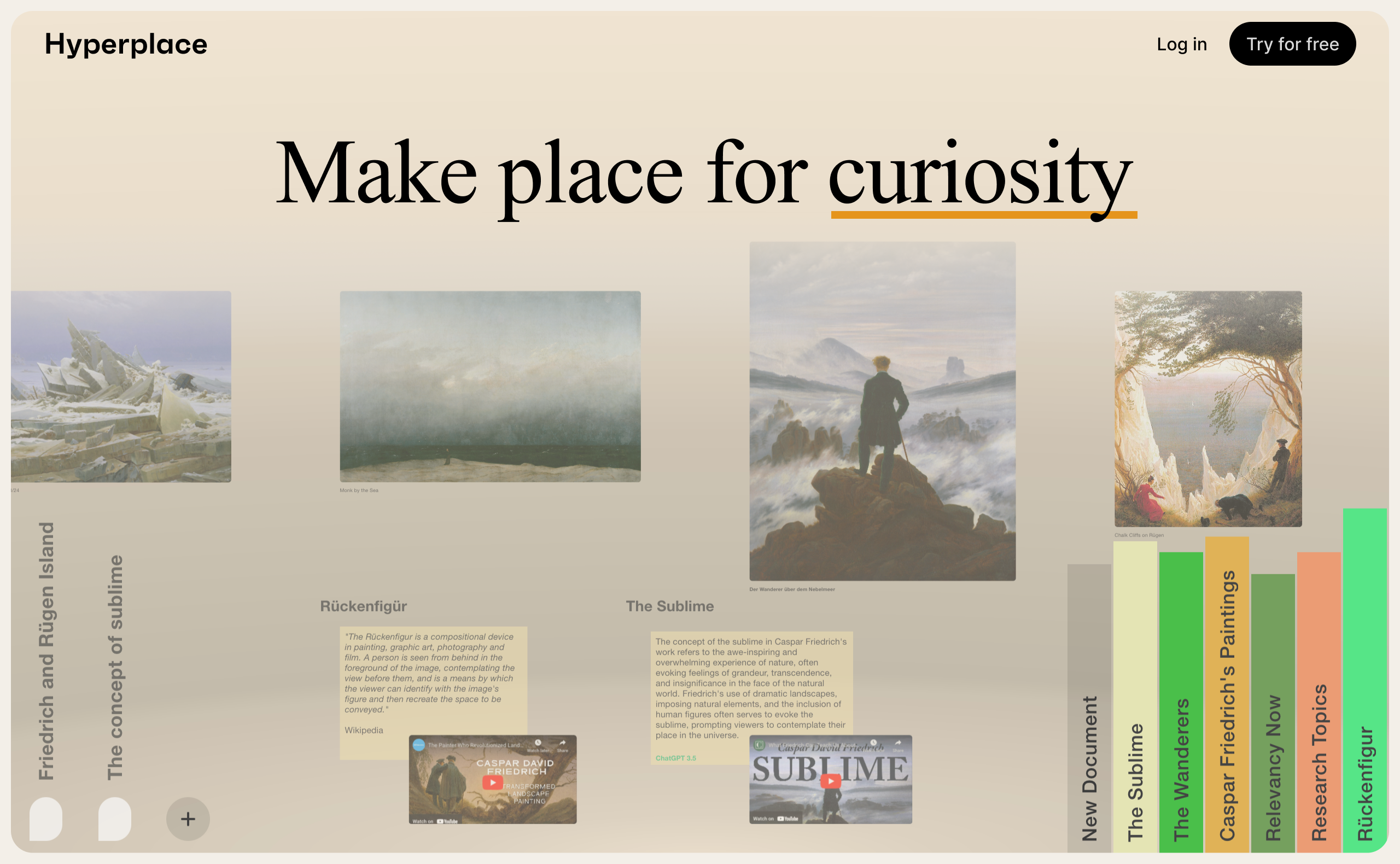
Our project, Hyperplace, also grew out of a similar note-taking practice. Over time, it evolved into the canvas-based project it is now, but at its core, the aim was to establish a positive feedback loop of habitual noticing, powered by note-taking.